

What is Shigaraki Ware?
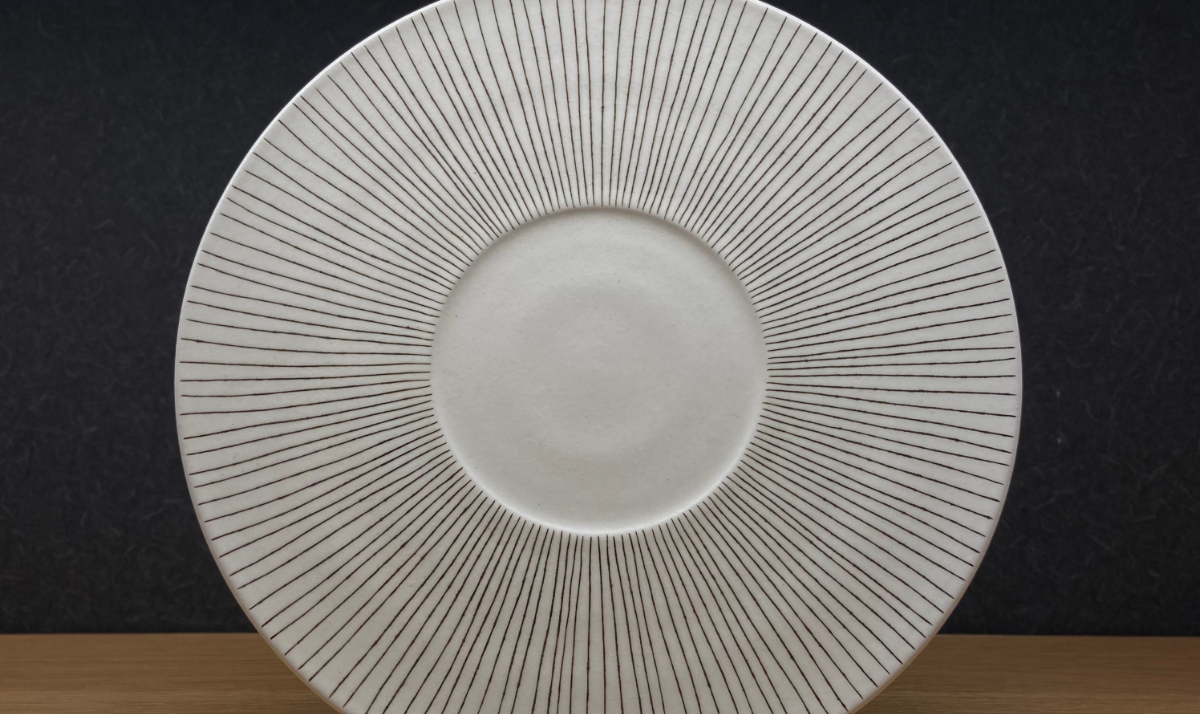
Shigaraki, Koka City, Shiga Pref,Ceramic Village, one of the six oldest kilns in JapanThe “Hana” is a simple, yet dignified vessel. The clay and fire nurtured by the mountains give the vessels a simple yet dignified presence. While they are known for their tanuki figurines, in recent years they are being reevaluated in daily life as vessels with a "beauty that is not overly formal.
This article introduces the origins and characteristics of Shigaraki ware, as well as its appeal that comes to life on modern dining tables.
Article
- 1.What is Shigaraki Ware? Pottery Nurtured by Fire and Soil
- 2.Shigaraki ware = the image of a raccoon dog
- 3.Production Process of Shigaraki Ware
- 4.The more you use it, the more the “scenery” grows.
- 5.The moment when the artist's “hand” rises up - from the solo exhibition of Akira Okuda
- 6.Japanese Modern N6: Encountering the “real thing” at Kita Maruyama
What is Shigaraki Ware? Pottery Nurtured by Fire and Soil
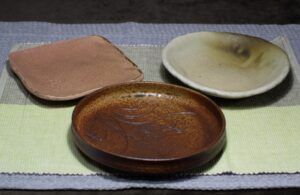
Shigaraki ware is a type of pottery known asBeauty that is not overdoneIt is a pottery that tells the story of "the" story with the material itself. Rather than pigments and excessive decoration, the particles of clay, melting ash, and traces of flame become the screen. When placed on the table, the main role is given over to the food and flowers, and the vessel becomes the "key color of the air. A vessel that designs the blank space, that is the realm of Shigaraki.
Shigaraki is located in the mountains of Koka City, Shiga Prefecture, and has long been known as one of the six oldest kilns in Japan. Located near Kyoto and Nara, Shigaraki has nurtured its own unique earthy flavor while incorporating the culture of the capital. The coarse-grained clay produced from weathered granite and the flame work of the wood-fired kilns are the key to the pottery's unique flavor.
The natural conditions of the land itself give Shigaraki ware its "not-too-pretty" beauty.
Shigaraki ware = the image of a raccoon dog

Many people may first think of "tanuki (raccoon dog) figurines" when they hear the word "Shigaraki ware. That adorable figure seen in front of train stations and in front of the eaves of stores is actually aIt was created by Shigaraki craftsmen after the war as a symbol of the region.Shigaraki ware is a traditional Japanese pottery. Since the 1950s, Shigaraki porcelain has spread throughout the country with wishes for prosperous business and good fortune, and the familiar image of Shigaraki porcelain as "tanuki," or raccoon dog, has taken root.
On the other hand, the history of Shigaraki is much older than that, and it has a stratum as a “production center of vessels” that has continued since the Middle Ages. Shigaraki is a place where Tanuki, a type of tanuki, is the "face of folk art" and Shigaraki vessels are the "fusion of life and beauty".
Both are expressions born from the same region, and it can be said that the spirit of this region is to combine practicality and playfulness. In recent years, Shigaraki ware has been attracting attention once again for its vessels that meet the needs of the modern dining table, opening up new horizons as the “home of tanuki” as well as the “home of vessels for daily life.
Production Process of Shigaraki Ware
Shigaraki ware is one of the six oldest kilns in Japan (Echizen, Seto, Tokoname, Shigaraki, Tanba, and Bizen), and has been passed down from the Middle Ages to the present. Its production proceeds as if nature and human skills are competing with each other.
The first clay used is granitic clay from the hills of Shigaraki. Because it contains a large amount of quartz and feldspar, its particles are large, and when fired, it retains a suppleness in its roughness. The clay is not kneaded too much, and the expression of the vessels is created by molding the clay as the grains are felt.
It is the Shigaraki way not to seek perfect symmetry or uniformity.
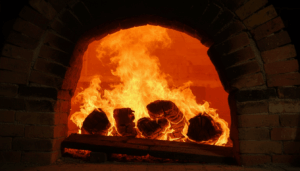
Then comes the firing. Using a climbing kiln or anagama, the flames and ashes paint a "landscape" on the surface of the vessel as the wood continues to burn for several days. While carefully calculating the position of the kiln and the firing method, the rest is left to nature.
Changes that appear to be coincidental are actuallyResults designed by experience and intuitionThe ash melts at high temperatures to form a natural glaze. The ashes melt at high temperatures to form a natural glaze, in which fire-red, bead-green, and burnt-black appear. These are not colors painted with glaze, but the record of clay, fire, and time itself.
The production of Shigaraki ware can be said to be the work of guiding, rather than controlling, the materials, while discerning the workings of nature. Standing on the borderline between control and chance, the resulting uneven beauty is the essence of Shigaraki ware.
The more you use it, the more the “scenery” grows.
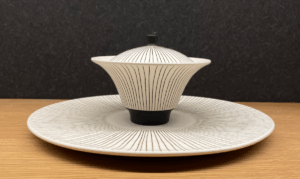
Shigaraki ware is a pottery that accompanies our daily lives in a wide range of forms, including plates, shallow bowls, serving bowls, sake cups, and flower vases. Because there are few strong mirror reflections, the texture of the food, such as steam, oil film, and sparkling juice, is gently reflected.
The shallow bowls have a “stage” created by the margins of the rim, setting the stage even for small quantities, while the grainy texture of the moribachi bowls harmonizes with leafy greens and root vegetables to create a natural harmony at the table. The matte skin of the sake vase reduces reflections, allowing the color of the sake to quietly settle in, while the fire color of the vase and the shimmer of the natural glaze highlight a single line of the vase.
This calmness affects not only the appearance but also the thinking of the user. The practical beauty of Shigaraki ware is that the reduction of visual noise speeds up serving decisions and lightens the daily flow from cooking to serving.
The basic rule for water-absorbent vessels is "use, wash, and dry. Follow the vessel's recommendation to stop boiling for a long period of time, and a mild detergent and a soft sponge are sufficient for daily use. If you are concerned about oil stains or tea stains, wash gently with warm water in which baking soda has been dissolved. Allow it to dry completely before storing it, and then soften the contact of the base with a cloth, which will calm the gloss and increase finger familiarity.
Shigaraki ware is a vessel that quietly marks the time of life, changing its expression each time it is used. Aging is not deterioration, but a “view” that builds up in your kitchen!The following is a list of the most common problems with the
The moment when the artist's “hand” rises up - from the solo exhibition of Akira Okuda
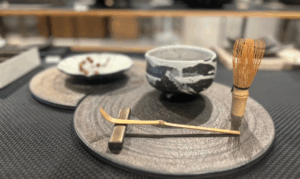
The other day,Shigaraki ceramic artist Akira Okuda's solo exhibition at Japanese Modern N6 Kita MaruyamaThe "Shigaraki" exhibition featured a group of works that balance lines and margins while preserving the clay flavor of Shigaraki to create a dining table setting. The contrast of black and white contrasts was particularly impressive, blending naturally with both Japanese and Western cuisine, and the practical design of the rim, thickness of the mouth rim, and center of gravity was impressive.
TSUBO-BUN, Okuda's base of operations, is a studio that traces its lineage back to 1862, when its founder, Bungoro Okuda, opened a climbing kiln, and in November 2023, the brand name was changed from "Bungoro-gama" to "TSUBO-BUN.
The matte texture of Shigaraki clay and Mr. Okuda's unique modern forms are on display and for sale at “Japanese Modern N6 Kita Maruyama” in Chuo-ku, Sapporo, where visitors can actually hold the pottery in their hands. This is a place where visitors can experience the "present" of Shigaraki ware not only during the exhibition period, but also as an everyday showroom.
Japanese Modern N6: Encountering the “real thing” at Kita Maruyama
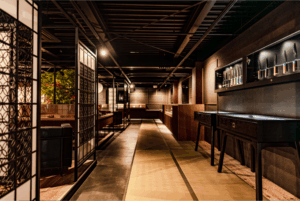
Shigaraki ware and other traditional crafts from around Japan are sold at the store ".Japanese Modern N6 Kita Maruyama(Chuo-ku, Sapporo) is a place where visitors can actually pick up a piece of pottery to see the “view” of its texture and color while making their selections. Shigaraki ware pieces introduced here are also displayed and sold in the store, allowing visitors to experience the expression of the clay and the nuances of the firing process in front of the actual pieces.
You can also purchase some of our products in our online store. If you are far away or would like to take your time to compare and contrast our products, we recommend you to use our online shop.
>> Click here to visit our online store.
View access and business information
